EU MDR Technical Documentation Training
Building, structuring and maintaining Technical Documentation according to Regulation (EU) 2017/745
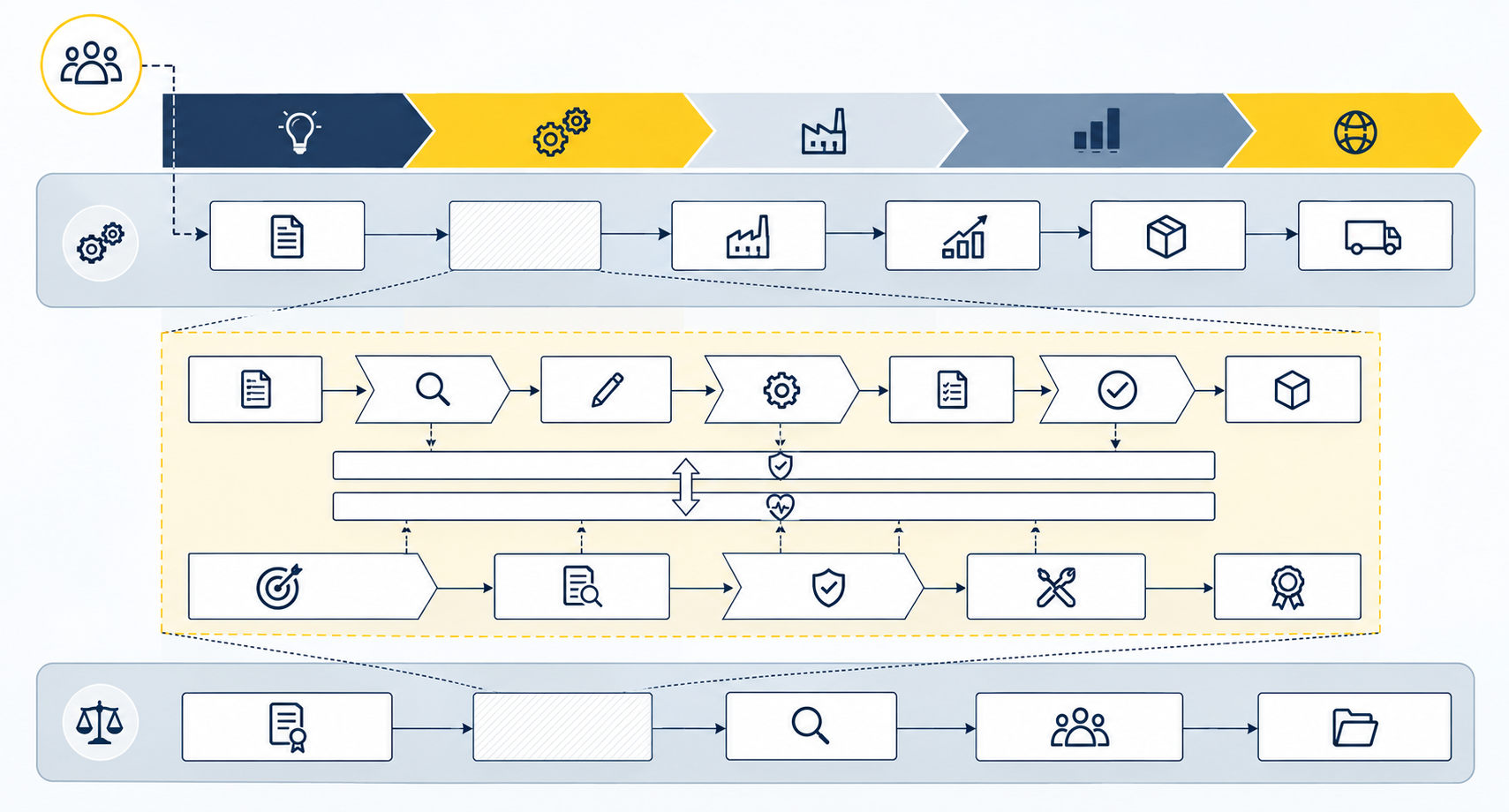
Technical Documentation is the regulatory foundation for demonstrating conformity. ELLECOM training focuses not only on which documents are required, but on how device description, intended purpose, classification, GSPR, risk management, V&V, clinical evaluation, labelling and post-market documentation connect into a coherent regulatory file.
Who Should Attend
Regulatory Affairs and Quality personnel
Technical Documentation specialists
Design, R&D and Quality Engineering teams
Clinical and Risk Management personnel
Product and Project Managers
PRRCs and EU Authorised Representatives
Medical device start-ups
Course Overview
Participants are guided through MDR Annex II and Annex III from device description through post-market documentation. Particular emphasis is placed on traceability, consistency, document control and preparation of assessment-ready Technical Documentation.
What You Will Learn
Understand the purpose and structure of MDR Annex II and Annex III Technical Documentation.
Prepare device description, specifications, intended purpose, variants and accessories.
Document classification and classification rationale.
Establish and maintain a GSPR checklist with traceable evidence.
Document design and manufacturing information.
Integrate ISO 14971 risk management.
Organize verification and validation evidence, including device-specific testing and validation.
Understand clinical evaluation, usability, biological evaluation, software/cybersecurity, sterilization, packaging and shelf-life documentation where applicable.
Establish Annex III PMS documentation.
Maintain Technical Documentation through change control and lifecycle updates.
Prepare Technical Documentation for Notified Body assessment.
EU MDR Technical Documentation - From Requirements to Practice
Our training provides participants with a practical understanding of how to develop, structure, review and maintain Technical Documentation in accordance with the EU MDR. The programme takes the requirements of Annex II and Annex III of Regulation (EU) 2017/745 and translates them into the documentation, evidence and traceability expected throughout the medical device lifecycle.
Explore the training topics below to understand what information should be included, how the individual sections of Technical Documentation connect, and how intended purpose, classification, GSPR, risk management, design and manufacturing information, verification and validation, clinical evaluation, labelling and post-market surveillance work together as one coherent regulatory file.
-
Understand the role of Technical Documentation in demonstrating device conformity and supporting conformity assessment and CE marking.
-
Learn the six main areas of Annex II: Device Description, Information Supplied, Design and Manufacturing, GSPR, Risk Management, and Verification & Validation.
-
Learn how to document the device identity, intended purpose, users, patient population, indications, contraindications, operating principle, classification, Basic UDI-DI, models, variants, accessories and materials.
-
Understand how the intended purpose connects with device qualification, classification, clinical evaluation, risk management, V&V, GSPR and labelling.
-
Learn how to identify the applicable MDR Annex VIII classification rule and develop a clear rationale supporting the final device class.
-
How does Clinical Evaluation support Technical Documentation?
-
Learn how PMS Plans, PMS Reports/PSURs, PMCF, complaints, vigilance, trends, feedback, literature and CAPA contribute to post-market Technical Documentation.
-
Understand how design, supplier, material, intended-purpose, labelling, clinical, standards and regulatory changes are assessed and incorporated.
-
Learn how to map MDR requirements to documents, revisions, responsibilities, GSPRs, risk controls and supporting V&V evidence.
-
Understand the requirements for device identification, UDI, economic operators, warnings, storage, sterility, symbols, operation, reprocessing and residual-risk information.
-
Learn how to document design stages, specifications, components, manufacturing processes, critical parameters, manufacturing sites, suppliers, process validation and product release.
-
Learn how to determine applicable GSPRs, justify non-applicable requirements and connect each requirement with standards, methods and supporting evidence.
-
Understand how hazards and risks connect with risk controls, verification of controls, residual risks and the overall benefit-risk conclusion.
-
Learn how testing and evidence support device safety and performance, including mechanical, electrical, EMC, biological safety, software, cybersecurity, usability, packaging, sterilization, transport and shelf-life, as applicable.
-
Understand how materials, type and duration of body contact, biological evaluation and supporting evidence are documented.
-
Learn how intended users, use environment, user interface, use-related risks, critical tasks and formative and summative evaluations are addressed.
-
Understand how a reviewer may assess device identification, consistency, classification, GSPR evidence, risks, V&V, clinical claims and PMS.
Building Stronger Technical Documentation
The training concludes by helping participants recognize and avoid common Technical Documentation weaknesses, including inconsistent intended purposes, insufficient classification rationales, unsupported GSPRs, missing risk and V&V traceability, inadequate acceptance criteria, sample mismatches, unsupported clinical claims, outdated standards and incomplete PMS documentation - supporting the development of consistent, traceable and well-structured Technical Documentation under the EU MDR.
Do you have a specific question about our EU MDR Technical Documentation Training?
Whether you are new to Technical Documentation, looking to strengthen your understanding of MDR Annex II and Annex III, involved in developing or maintaining Technical Documentation, or preparing your organization for a Notified Body assessment, this training can be adapted to your learning needs.
Contact us to discuss your training requirements, medical device scope and the Technical Documentation topics most relevant to your team.