MANUAL CLEANING VALIDATION
From Reprocessing Instructions to Objective Cleaning Evidence
How can manufacturers demonstrate that a reusable medical device can be effectively cleaned before subsequent disinfection or sterilization?
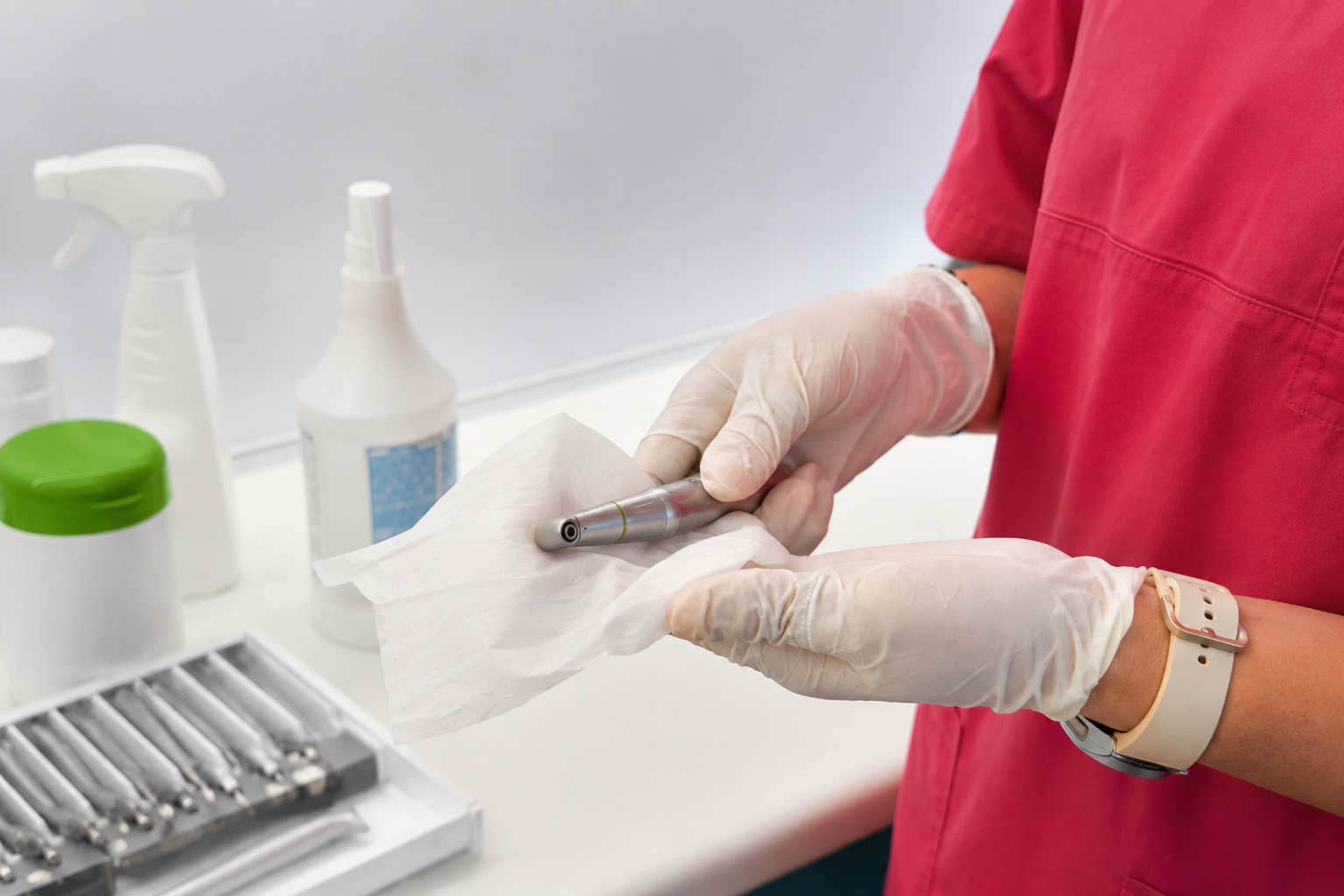
A well-structured manual cleaning validation begins with the device design, intended use, contamination risks and the cleaning instructions provided to the user. The cleaning process should identify the areas most difficult to clean, including internal channels, joints, recesses and other surfaces where clinically relevant contamination may remain.
Validation should then challenge the defined cleaning procedure under representative worst-case conditions. Devices may be deliberately contaminated with representative clinical soil and subsequently evaluated for relevant residual contamination, such as protein and hemoglobin. Challenge conditions can also be designed to assess whether the cleaning process remains effective under defined, less favourable processing conditions.
Cleaning effectiveness should not rely only on visual inspection. Appropriate analytical methods and predefined acceptance criteria should be used to determine whether clinically relevant residues have been reduced to acceptable levels. Recovery efficiency should also be established so that the manufacturer can demonstrate that the analytical method is capable of recovering contamination from the device surfaces and internal channels being evaluated.
Manual cleaning validation is also different from sterilization validation. Cleaning demonstrates the removal of soil and contamination from the device and sterilization subsequently addresses microbial inactivation. An effective sterilization process therefore does not replace the need for an adequately validated cleaning process when cleaning is required before sterilization.
ELLECOM supports manufacturers in developing and executing manual cleaning validation strategies from reprocessing-process assessment and worst-case definition through protocol development, laboratory coordination, evaluation of residual contamination and preparation of traceable validation documentation.
HOW WE CAN SUPPORT YOU
• Manual cleaning validation strategy
• Review and development of reprocessing Instructions for Use
• Identification of difficult-to-clean and worst-case device locations
• Definition of representative clinical soils and contamination challenges
• Selection of worst-case cleaning conditions
• Definition of detergent concentration, contact time and cleaning parameters
• External surface and internal channel cleaning assessment
• Protein and hemoglobin residual testing
• Visual cleanliness evaluation
• Recovery-efficiency assessment
• Definition of analytical methods and acceptance criteria
• Validation protocol and report development
• Coordination with cleaning-validation laboratories
• Risk management and Technical Documentation traceability
• Change assessment and revalidation strategy
DISCUSS YOUR MANUAL CLEANING VALIDATION PROJECT